Wilderness as Classroom: A Field Study in Land Art and Observation
Crossing California, Nevada, and Utah, Otis College students encounter landscape as both subject and artistic medium.
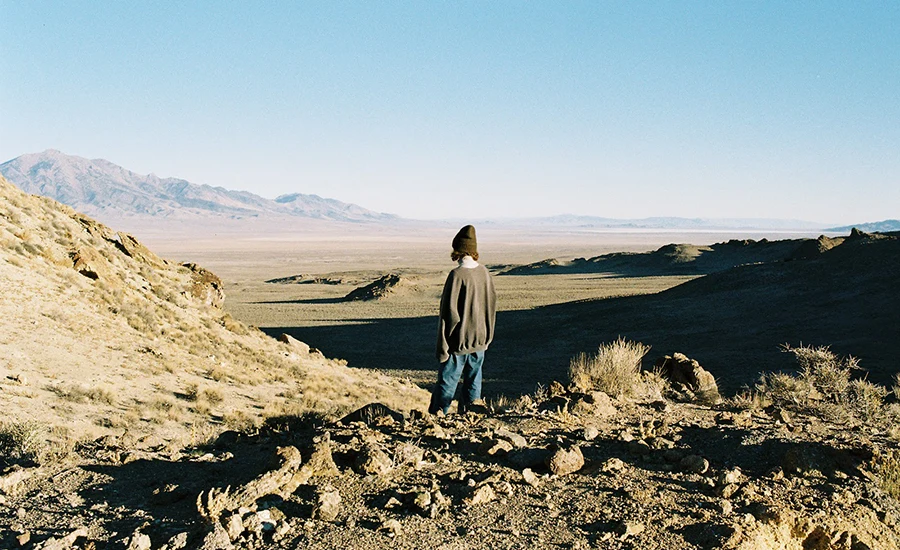
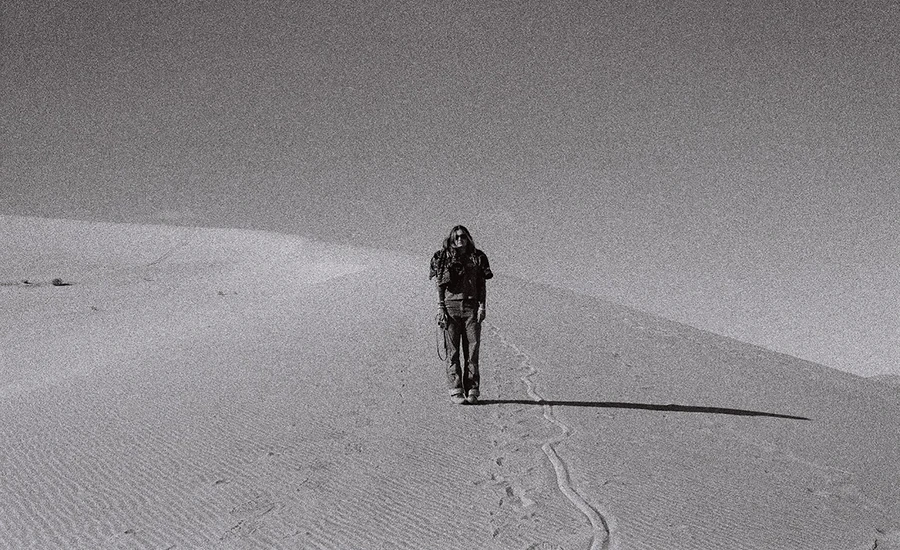
Photograph by Otis faculty member Ian James.
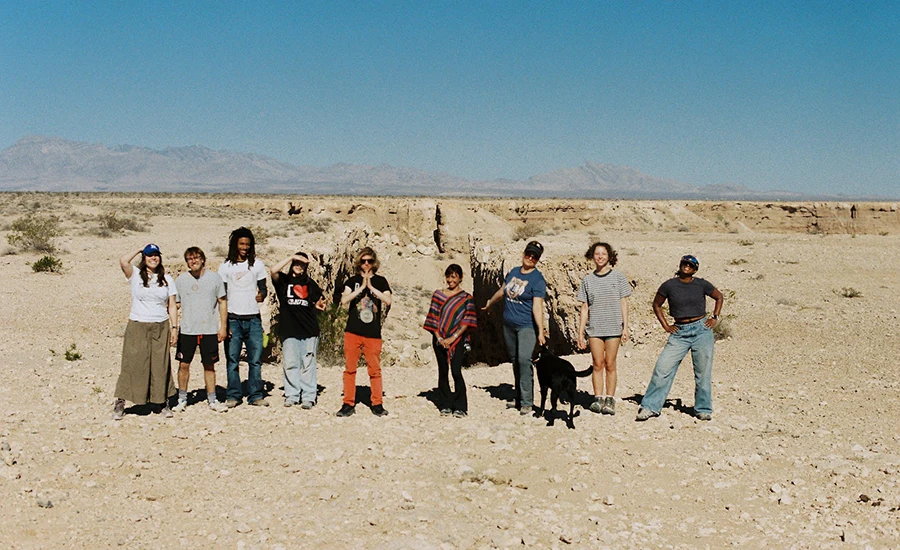
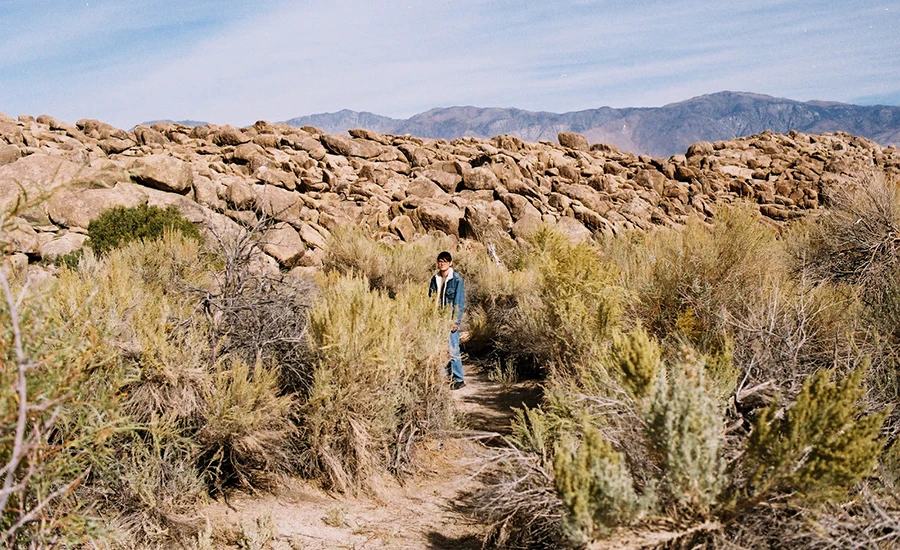
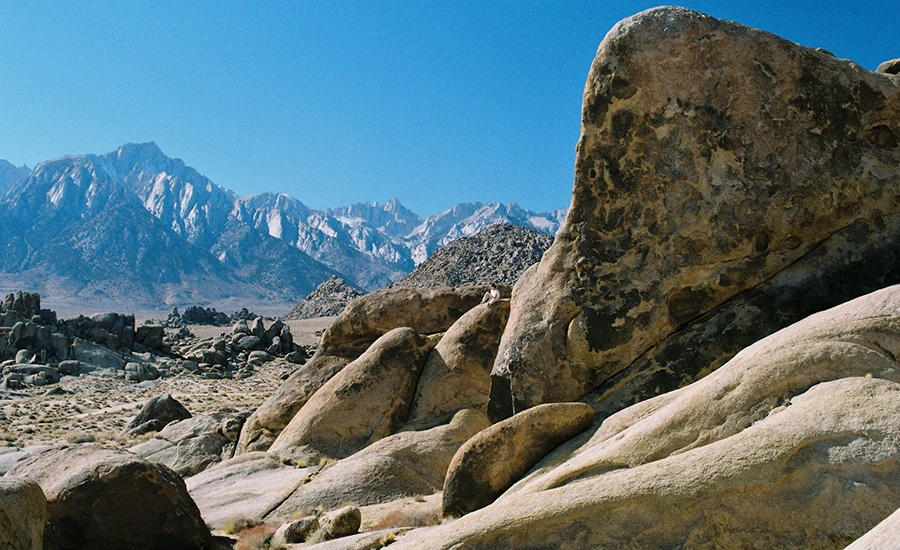
Each fall, a small group of Otis College students trades in the studio for the open road. Enrolling about 10 undergraduate and graduate students, Wilderness as Myth and Metaphor, a Fine Arts program elective course, culminates in a six-day, five-night trip through the American Southwest. It is an immersive experience shaped by travel, shared labor, and sustained observation that spans much of California, Nevada, and Utah.
Traveling by day and camping each night, students move through dramatic shifts in temperature and terrain, starting in tank tops and shorts, layering into fleece jackets and pants, and returning again to warm-weather clothing. Along the way, they visit major land art works including Nancy Holt’s Sun Tunnels and Robert Smithson’s Spiral Jetty in Utah, and Michael Heizer’s Double Negative in Nevada, among others.
The trip is structured around collective responsibility and attentiveness. Students cook meals together, build camp, and engage in extended periods of critical observation. Evenings are spent in fireside discussions that connect lived experiences from the trip with course material introduced earlier in Los Angeles. For many students, the rhythm of the trip—traveling, cooking, observing, and discussing—becomes central to the learning process.
Class Origins
The course began in 2014, when Fine Arts faculty and photographer Ian James and former faculty Chris Badger (’05 BFA Fine Arts) proposed what they initially thought might be a one-time experience. “Maybe we get to run it once,” James recalls thinking. However, the elective proved compelling and even life-changing to those who signed up, and word soon spread. James has since co-taught the course with Badger, Aurora Tang of the Center for Land Use Interpretation and the Getty Museum, and Fawlene Copeland (’25 MFA Fine Arts), who’s also a course alum.
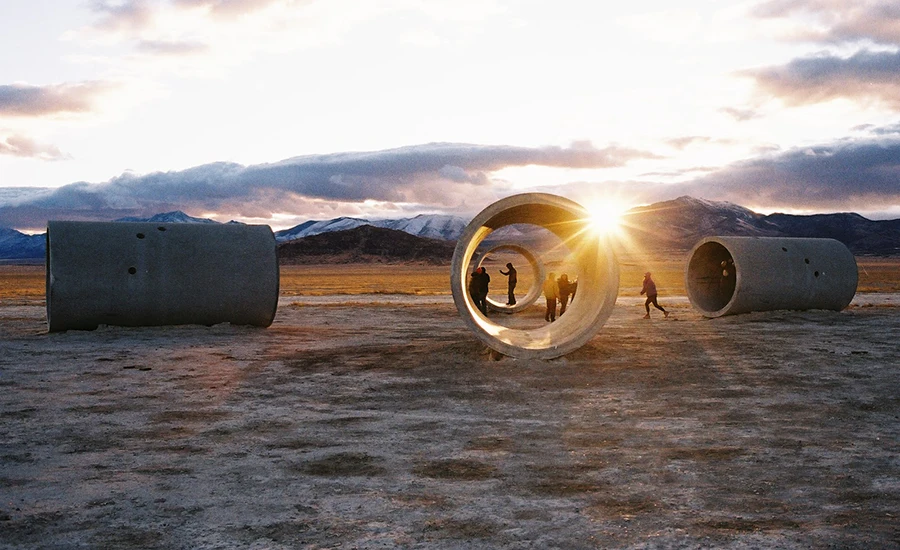
Photographs by Otis faculty member Ian James.
A key influence on the course is James Benning’s Looking and Listening class at the California Institute of the Arts. In a 2007 interview with Artforum, Benning described the premise: “The class and I practice paying attention. I take them to many different places, often for a full day, and we look and listen. We gradually learn that our looking and listening are coded by our own prejudices.”
This framework informs the Otis course’s emphasis on observation as an active, trained practice. As James explains, “There’s so much nuance and subtlety that is rich material for artists, but you have to train yourself to see it. Benning often talked in his classes about how artists are like journalists. They go out into the world and collect information and create a ‘report,’ so to speak, with their artwork, to bring to the world.”
Over time, the visited sites themselves have become part of the course’s evolving context. “The first time I saw Robert Smithson's Spiral Jetty in 2008 when I was in graduate school, the water of the Great Salt Lake lapped at the edges of the sculpture. We explored the sculpture while wearing waders,” says James. Since the course began in 2014, however, the lake’s waterline has receded dramatically. “Spiral Jetty now sits on a salt flat, as the water from the Great Salt Lake has receded due to drought and water consumption from Salt Lake City.”
The elective class engages students with landscape as both subject and medium, encouraging them to consider how artists and cultural groups have used land in aesthetic, political, industrial, and agricultural contexts. Additional themes of the course include astronomy, biology, astrophysics, colonialism, the military, and histories of internment. These frameworks expand how students interpret the environments they encounter, situating land art within broader systems and collective histories.
The Great Outdoors
Despite the scale and complexity of the trip, the structure remains intentionally accessible. A $400 course fee covers travel expenses and students bring their own sleeping bags. Faculty lead the journey in two large SUVs. For many participants, the experience marks their first time camping. The group dynamic emphasizes mutual support and respect for one another and for the sites they visit. Even logistical challenges, such as the occasional flat tire, become part of the shared experience.
Students often describe the trip as transformative. The combination of physical immersion,
sustained observation, and collective inquiry shapes how they think about their work
and their role as artists.
Eloïse Kabbaz Szabo, a 2026 MFA Fine Arts candidate, says, “I can easily say my entire
Otis experience was shaped by this class: my first semester I found out about it;
my second semester I got to look forward to it; my third semester I was finally able
to take it; and during my fourth semester, I was able to fully digest and implement
everything I had learned the semester prior. The trip is fun, essential, and rewarding.”
The experience does not end when the group returns to Los Angeles. In the final phase of the course, students collaborate on a group project. Culminating projects have taken varied forms, including one-night exhibitions and performances at Dockweiler Beach and Joshua Tree, as well as group publications. Like the trip itself, the work emphasizes collaboration, site responsiveness, and the translation of observation into artistic form.
Through Wilderness as Myth and Metaphor, Otis students engage directly with landscape, not as a distant subject but as an active field of inquiry, one that requires attention, adaptability, and a willingness to see beyond first impressions.
Learn more about the BFA Fine Arts program at Otis College.
Learn more about the MFA Fine Arts program.
Related News

From Otis Design Lab to Full-Time Designer
July 22, 2026